Flooded Home or Basement: What to Keep, What to Clean and What to Throw Away (and What to Photograph First for Insurance)
Published
After a flood, sort fast but photograph first. What CDC, EPA, FDA and FEMA say to throw away (drywall, carpet, mattresses, food in non-waterproof containers, medicine), what you can usually clean, how to save photos and papers, and how flood insurance usually treats basements.
Should I throw out drywall that got wet in a flood?
Short answer: Usually, if floodwater soaked it. CDC says to remove and discard drywall and insulation contaminated with sewage or floodwater, and EPA says to throw away materials that soak up a lot of water, such as drywall, carpet and ceiling tiles. Photograph it and keep a small sample for your adjuster before it goes. A clean-water leak from a pipe is a different situation and some materials may be dried in place; a water damage pro can measure moisture and tell you.
Can I keep canned food that was in floodwater?
Short answer: Only undamaged, commercially made all-metal cans and retort pouches (like shelf-stable juice or tuna pouches), and only after you wash and sanitize them the way FDA describes. FDA says to throw away food in containers with screw caps, snap lids, pull tops or crimped caps, cardboard juice, milk and baby formula boxes, home-canned food, and any dented, swollen or leaking cans that touched floodwater.
Does flood insurance cover my basement belongings?
Short answer: Mostly no. Under the standard NFIP policy, contents coverage in a basement is limited to a short list (FEMA lists washers and dryers, food freezers and the food in them, and portable or window air conditioners), and building coverage there is limited to items like furnaces, water heaters, sump pumps, electrical boxes and unfinished drywall. FEMA's fact sheet says the policy doesn't pay to remove items it doesn't cover, such as basement carpet. Private flood policies can differ, so read yours. Only your insurer decides coverage.
Should I throw things out before the adjuster comes?
Short answer: Photograph first, then throw out what's a health risk. FEMA and FloodSmart say to take photos and video of damaged items before cleaning or discarding them, record make, model and serial numbers of appliances and electronics, keep small samples of carpet, flooring, drywall and drapes, and then immediately throw away things like spoiled food, clothing, cushions and pillows. Waiting too long to dry things out can backfire: NFIP policies don't cover mold the owner could have reasonably prevented.
The short version
Floodwater can carry sewage, chemicals and bacteria, and anything soft that soaked in it is hard to make safe again. The rule of thumb from EPA: you can usually clean and dry materials that don't soak up water (metal, glass, hard plastic), and you should throw away materials that soak up a lot of water and can't be cleaned and dried within 24 to 48 hours. Before anything goes to the curb, photograph it and keep samples for your insurer. This week, NWS has Flood Watches up for much of Florida's east coast, with 3 to 6 inches of rain and locally up to 8 to 12 inches forecast in east-central Florida through Friday, and parts of the St. Johns River already in flood, so this is worth reading before the water arrives.
Safety before you sort anything
If outlets, wiring or appliances got wet, CDC says to shut the power off at the main breaker, and to call an electrician if you would have to stand in water to reach it. Never use a generator, pressure washer or other fuel-burning tool inside the house, garage or basement; EPA says to run generators outside and at least 20 feet from buildings. If you smell gas, leave and call for help. Wear an N95 respirator, goggles, gloves, long sleeves and boots (EPA), and rubber boots and gloves if sewage is involved (CDC). EPA says children, pregnant people and anyone with asthma or a weakened immune system should not take part in flood cleanup. Older homes can have asbestos or lead paint in walls and flooring, so be careful about tearing them out yourself.
Photograph first, and keep samples
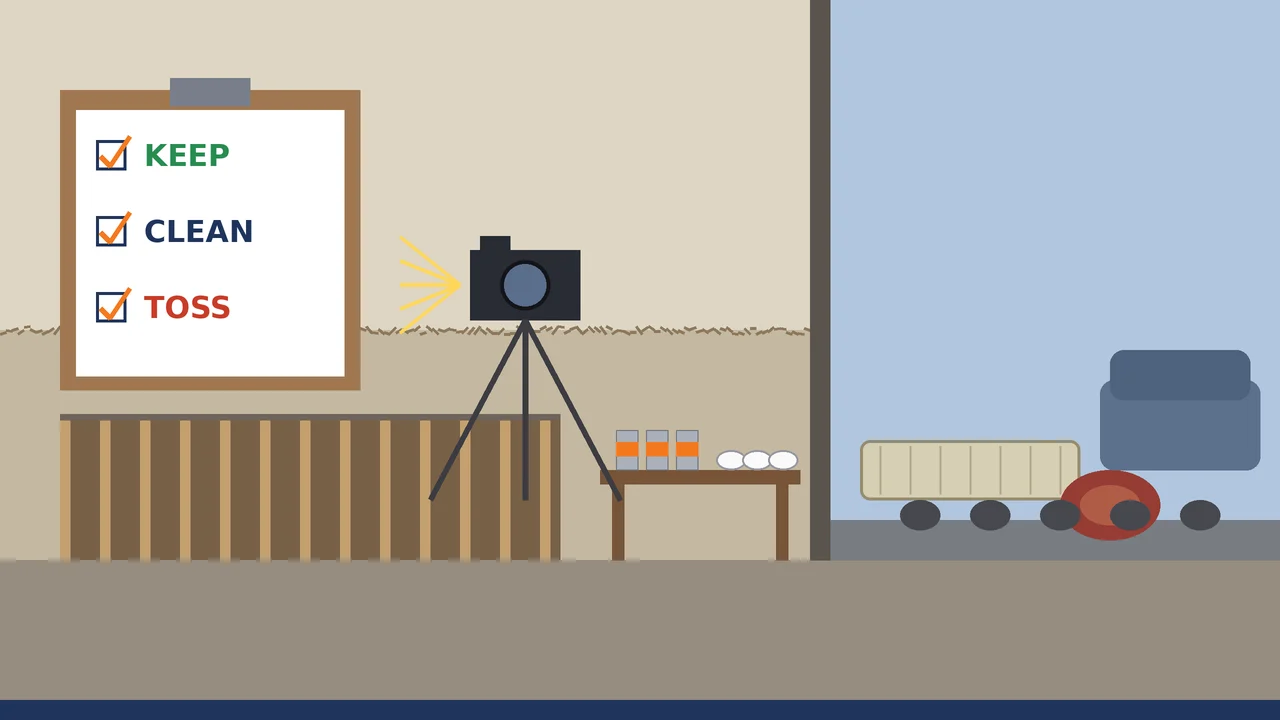
FloodSmart and FEMA say to take clear photos and video of damage before cleaning, fixing or throwing anything out: wide shots and close-ups of each room, the water line on walls, furniture and appliances, and the make, model and serial number of appliances and electronics. Keep small samples (swatches) of damaged carpet, flooring, drywall, insulation, wallpaper and drapes for the adjuster, and save receipts for cleanup supplies, repairs and replacement items. FEMA says that once you've photographed them, you should immediately throw away flooded items that are a health risk, such as perishable food, clothing, cushions and pillows. A home inventory made ahead of time makes this much faster.
Usually throw away
CDC's list of things to throw away if you can't clean and dry them quickly includes mattresses, carpeting, carpet padding, rugs, upholstered furniture, cosmetics, stuffed animals, baby toys, pillows, foam-rubber items, books, wall coverings and paper products. CDC also says to remove and discard drywall and insulation that has been contaminated with sewage or floodwater, and EPA adds ceiling tiles to the list of materials that soak up too much water to save. For child-safety gear like car seats, check the manufacturer's instructions or call them before reusing anything that sat in floodwater.
Usually can be cleaned
Hard, non-absorbent things can usually be saved. CDC says to clean wet items and surfaces thoroughly with hot water and laundry or dish detergent, including flooring, concrete, molding, wood and metal furniture, countertops, appliances, sinks and other plumbing fixtures. EPA says some fabrics and clothing can be saved by running them through the laundry, and that a restoration specialist may be able to clean and dry precious items. For hard toys, CDC suggests washing them in 1 cup of bleach per 5 gallons of water and letting them air dry, but stuffed animals and baby toys that can't be disinfected should go. Never mix bleach with ammonia or other cleaners, and open windows when using it. Clean first and dry completely: mold can start growing on wet wood, drywall, carpet and furniture within a day or two.
Food, dishes, drinking water and medicine
FDA says not to eat any food that may have touched floodwater unless it was in a waterproof container. That means throwing away food in containers with screw caps, snap lids, pull tops or crimped caps, cardboard juice, milk and baby formula boxes, home-canned food, and any cans that are swollen, leaking, punctured, deeply rusted or badly dented. Undamaged, commercially made all-metal cans and retort pouches can be saved: remove paper labels, wash them with soap and hot water, rinse, then sanitize by boiling for 2 minutes or soaking for 15 minutes in 1 cup of unscented bleach per 5 gallons of water, air dry for at least an hour, relabel them (with the expiration date) in permanent marker, and use them soon. Wash metal pans, ceramic dishes and utensils with soap and hot water, then sanitize them by boiling or soaking for 15 minutes in 1 tablespoon of unscented bleach per gallon of water. If your well flooded, have the water tested and disinfected before you drink it. FDA says medicines that touched floodwater should be thrown out, even in their original containers; if a lifesaving medicine is the only one you have and it looks unchanged, it can be used until you can replace it, so call your pharmacist or doctor right away.
Photos, papers and family keepsakes
These can often be saved if you act within about two days. FEMA says to freeze photos, papers, books and textiles if you can't get them dry within 48 hours, wrapped in freezer paper. Never pull apart wet photos that are stuck together; rinse photos gently in distilled or clean water, don't touch or blot the image, and air dry them face up or hang them by a corner so they don't touch anything. Dry documents flat as single sheets or in piles no more than a quarter inch high. The Library of Congress says not to freeze some items, including cased photographs like daguerreotypes, glass-plate negatives, framed paintings and audio or video tape, and the National Archives says very valuable or irreplaceable items should go to a conservator. If you have time, take a phone photo of each picture first so you at least have a copy.
Walls, floors and insulation
A FEMA guide on initial restoration of flooded buildings says drywall or plaster soaked by contaminated floodwater should be removed: if the water was less than about 2½ feet deep, remove the wall material to a height of 4 feet; if it was deeper, remove it to 8 feet or to the ceiling. It says to remove wet carpet, pad and tack strip, fibrous insulation (fiberglass, cellulose, mineral wool) that floodwater saturated, and flooded electrical outlets after the power is off, while foam plastic insulation may be left to dry. It also cautions that punching holes in walls doesn't help them drain or dry, and that bleach has drawbacks in flooded buildings (it can corrode electrical and mechanical parts and works poorly on dirty surfaces). A water damage pro will use moisture meters and drying equipment to decide what stays and what goes.
How insurance usually treats it
Standard homeowners policies usually exclude flood (rising water from outside), so damage from a flood is usually a flood insurance question, while a burst pipe inside may fall under homeowners coverage. Basements are where many people get surprised. FEMA's basement fact sheet says NFIP basement coverage is limited to specific items, such as furnaces and water heaters, central air conditioners, sump pumps, electrical boxes and outlets, attached stairways, and unfinished, untaped drywall, plus some cleanup, and that the policy doesn't pay to remove items it doesn't cover, such as carpet installed in a basement. Contents coverage in a basement is limited to items like washers and dryers, food freezers and the food in them, and portable or window air conditioners. FEMA also says NFIP policies cover up to $1,000 in reasonable expenses to protect insured property from a flood and up to $1,000 to move it out of harm's way, so keep receipts for sandbags and moving costs, and it recommends talking to your adjuster or insurer before signing a contract with a cleanup or remediation company. NFIP policies don't cover mold damage that you could have reasonably prevented, so start drying quickly. Private flood policies can work differently. Only your insurer decides coverage.
How we can help
ClaimToRepair makes the insurance side easier and gets the repairs done. One licensed local water damage pro can do a free inspection, photograph and document the damage, write an estimate you can share with your insurer, and handle the tear-out, drying, cleanup and rebuild. We don't file, negotiate or adjust claims, and only your insurer decides what is covered. If water is in the house right now and it is safe to be there, use Get immediate help: the same-day option has a $50 dispatch fee that is refunded if no one arrives the same day and isn't applied to the cost of the job, or you can schedule a visit instead.
Sources
- CDC: Guidelines for cleaning safely after a disaster
- U.S. EPA: Flood cleanup to protect indoor air and your health
- U.S. EPA: Flood cleanup, protecting indoor air quality (fact sheet, PDF)
- U.S. FDA: Food and water safety during power outages and floods
- U.S. FDA: Safe drug use after a natural disaster
- FloodSmart (NFIP): Document flood damage
- FEMA: How do I start my flood claim?
- FEMA/NFIP: What does flood insurance cover in a basement? (fact sheet, PDF)
- FloodSmart (NFIP): What flood insurance covers
- FEMA: Initial restoration for flooded buildings (PDF, EPA archive)
- FEMA: Save your family treasures
- FEMA fact sheet: Salvaging water-damaged family valuables and heirlooms (PDF, Ready.gov)
- National Archives: Emergency salvage of flood-damaged family papers
- Library of Congress: How to freeze wet collections
- National Weather Service Melbourne (Florida Flood Watch, Nov 17–20, 2026)
General information only, not legal or insurance advice. Coverage depends on your policy.
Get a free inspection and written estimateDamage happening now? Get immediate help
Free inspection, no obligation. You get photos and a written estimate to share with your adjuster, so you know the real repair cost before you decide whether to file a claim. We don't file, negotiate or adjust claims.