Should I File a Small Home Insurance Claim? Claims History, CLUE Reports, Non-Renewal Rules and How to Decide
Published
Worried that a small claim will raise your rate or get your policy dropped? How claims history is tracked (CLUE reports), the difference between asking a question and filing a claim, what state insurance regulators in Texas, Florida, New York, Tennessee and Connecticut say about weather claims and non-renewal, and a simple way to decide whether a small loss is worth claiming.
Will filing one small claim get my homeowners policy non-renewed?
Short answer: Not usually by itself, but it depends on your insurer and your state. Insurers do use claims history: the NAIC lists your claims history as a factor in home insurance pricing, and New York's Department of Financial Services warns that filing multiple small claims over a short period can get you treated as a higher risk and may lead to non-renewal. Some states limit this. In Texas, for example, the Department of Insurance says an insurer can't refuse to renew based on claims for damage from natural causes, including weather, or claims that were filed but not paid, and for other claims it generally must send a written warning after a second claim in three years before a third can be used to nonrenew. Florida says claims from an act of God can be cited for cancellation or non-renewal only if the insurer shows you failed to take reasonable steps it asked for to prevent the damage from recurring. Your state insurance department can tell you the rules where you live.
If I just call my insurer or agent to ask a question, does that count as a claim?
Short answer: It shouldn't, but be clear. Texas and Tennessee regulators say insurers aren't supposed to report questions about your policy or deductible to the CLUE claims database, and Texas says insurers can't use your questions to deny, nonrenew or cancel coverage. But the Connecticut Insurance Department notes that calling to discuss an actual loss may be treated as reporting a claim, and a claim can show up on a CLUE report even if nothing is paid. Say plainly whether you're asking a general coverage question or reporting a loss, and read your policy's declarations page first.
What is a CLUE report and how do I see mine?
Short answer: CLUE (Comprehensive Loss Underwriting Exchange) is a LexisNexis database of up to seven years of home and auto insurance claims that many insurers check when you apply for a quote or renew. Regulators in Tennessee and Connecticut say insurers report claims they pay, claims they open a file for, and claims they formally deny, and the report follows the property even if you weren't the owner. Under the Fair Credit Reporting Act you can get one free copy every 12 months from LexisNexis (866-312-8076 or its consumer portal) and dispute anything that's wrong or add an explanation.
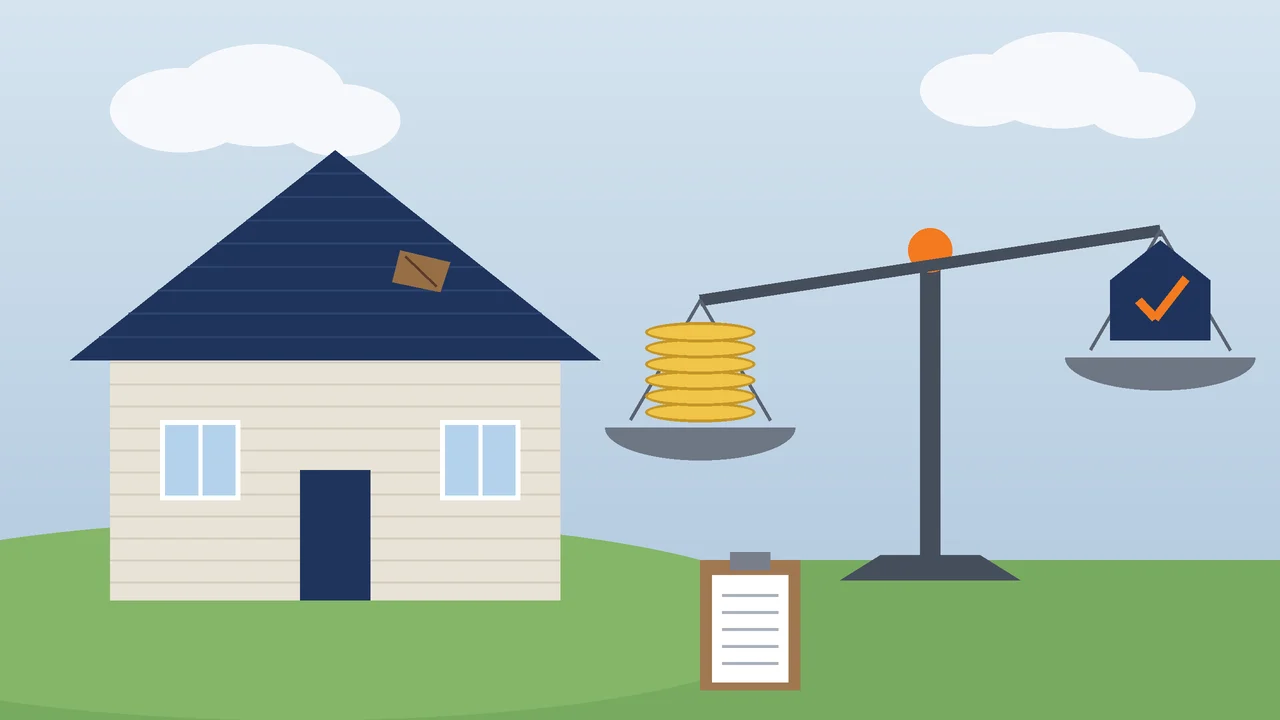
How do I decide whether a small loss is worth a claim?
Short answer: Start with three numbers: the repair estimate, your deductible (on your declarations page; Triple-I notes some homeowners deductibles are a percentage of your dwelling coverage, and the deductible applies to each claim), and what you'd actually receive after it. If the payout is small, ask your agent how a paid claim could affect your renewal price or any claims-free discount, and check your state's rules on weather claims. Large losses, injuries on your property and anything that could keep getting worse are what insurance is for. And don't sit on a loss to decide later: most policies require prompt notice, and damage like a roof leak can grow. Only your insurer decides what is covered.
Why this question comes up after every storm
After hail, wind or a tree limb through the roof, a lot of homeowners hesitate: if the repair is only a little more than the deductible, is a claim worth it, and could it get the policy dropped? Stories about a small storm claim followed by a non-renewal notice spread fast online. The real answer depends on your insurer, the cause of the damage and your state's rules, and the details below come from state insurance regulators and consumer agencies so you can make the call with facts instead of fear.
How insurers know your claims history
Most insurers check the Comprehensive Loss Underwriting Exchange (CLUE), a LexisNexis database. The Texas Department of Insurance says CLUE reports show the claims history of people and houses for the last seven years, regardless of who owned the house, and that a company can charge more or refuse to sell a policy based on what's in the report. Tennessee and Connecticut regulators say insurers report claims they pay, claims they set up a file for, and claims they formally deny, along with the date and type of loss and the amount paid. Not every insurer subscribes, so a claim with a non-participating company may not appear.
A question is not a claim (but say which one you mean)
The Texas Department of Insurance says companies aren't supposed to report questions about your policy or deductible to CLUE, and that insurers can't use your questions to deny, nonrenew or cancel your coverage; its 2024 bulletin adds that this covers questions about how to file a claim and whether a policy will cover a loss, unless the question is about specific damage that has occurred and leads to an investigation or claim. Tennessee law also bars raising a premium or canceling a homeowners policy solely because of inquiries such as coverage questions. Connecticut's insurance department cautions that calling to discuss an actual loss may be treated as reporting a claim. So before you call, decide whether you're asking a general question or reporting damage, and say so clearly.
What some states say about weather claims and non-renewal
Rules vary a lot, and these are examples, not a national standard. Texas: the Department of Insurance says an insurer can't refuse to renew, or raise your premium, based on claims for damage from natural causes, including weather, or claims filed but not paid; for other claims, it generally can't nonrenew unless you filed two claims in three years, it sent written notice after the second that a third could lead to non-renewal, and you then filed a third. Florida: the Department of Financial Services says act-of-God claims can be cited for non-renewal only if the insurer shows you failed to take reasonable steps it requested to prevent the damage from happening again, though it may raise your deductible at renewal. New York: after a policy has been in force 60 days, it generally can't be canceled or non-renewed for three years except for listed reasons such as nonpayment or fraud, and DFS still advises being careful about filing multiple small claims in a short time. Check your own state insurance department's consumer pages for the rules that apply to you.
If you get a non-renewal notice
Non-renewal (the policy ends at its normal expiration) is different from cancellation (it ends mid-term). States require advance written notice: Florida generally requires at least 120 days with a specific reason; New York 45 to 60 days with the reason; Texas 60 days for policies bought or renewed in 2024 or later, and the company must give the reason if you ask. New York's DFS points out that an insurer may be pulling back from an area or a line of business, so a non-renewal isn't necessarily about something you did, and a non-renewal doesn't necessarily mean another company will charge you more. Start shopping right away with an independent agent, and if you think the reason is unfair, you can file a complaint with your state insurance department. If no private insurer will offer coverage, Triple-I and the NAIC explain that many states have a FAIR Plan, a coverage source of last resort that often costs more and covers less.
A simple way to decide on a small loss
First, get the facts: a written repair estimate and photos of the damage. Second, find your deductible on the declarations page. Triple-I explains that a deductible can be a dollar amount or a percentage of the insured value, and that it applies each time you file; wind, hail and hurricane deductibles are often separate. Third, subtract: if the estimate minus the deductible is small, ask your agent (as a general question) how a paid claim could affect your renewal, any claims-free discount, and whether your state treats weather claims differently. Fourth, think about what could get worse. A small roof leak or hidden water can grow into a bigger loss, and most policies require you to report a loss promptly, so don't wait months to decide. For a large loss, an injury on your property, or damage you can't fully see, filing is usually what insurance exists for. New York's DFS also suggests a higher deductible and regular maintenance as ways to avoid a pattern of small claims.
Check your own CLUE report
Under the Fair Credit Reporting Act you're entitled to one free copy of your CLUE report every 12 months from LexisNexis (866-312-8076, or its consumer report portal). The Consumer Financial Protection Bureau says the company must investigate disputes free of charge, and Tennessee says LexisNexis will verify disputed items with the reporting insurer and notify you of the results within 30 days; you can also add an explanation that appears on future reports. If you're buying a home, New York and Texas regulators suggest asking the seller for a CLUE report on the property, since past water claims can affect how insurers view it.
Protect the house either way
Whether or not you file, protect the property from further damage if it is safe to do so (a tarp, shutting off water, drying wet materials), photograph everything before and after, and keep receipts. That documentation helps if you decide to file, and it shows the insurer you took reasonable steps to prevent more damage, which matters under rules like Florida's. It also helps if you pay out of pocket and the problem comes back later.
How we can help
ClaimToRepair makes the insurance side easier and gets the repairs done. One licensed local pro can do a free inspection, document the damage with photos and a written estimate, and quote the repairs, so you know the real numbers before you decide whether to file, and you have the documentation ready if you do. We don't file, negotiate or adjust claims, we can't tell you whether to file, and only your insurer decides what is covered. If water is coming in right now, use Get immediate help: the same-day option has a $50 dispatch fee that is refunded if no one arrives the same day and isn't applied to the cost of the job, or you can schedule a visit instead.
Sources
- Texas Department of Insurance: Home insurance guide (CLUE, non-renewal reasons and notice)
- Texas Department of Insurance: Consumer Bill of Rights for Homeowners, Dwelling, and Renters Insurance (limits on using claims history; questions can't be used to nonrenew)
- Texas Department of Insurance: Commissioner's Bulletin B-0009-24 (nonrenewal and inquiries, Insurance Code 551.107 and 551.113)
- Texas Department of Insurance: How to get a CLUE about your claims history
- Florida Department of Financial Services: Homeowners Insurance Overview (nonrenewal notice, act of God claims)
- Florida Statutes 627.4133 (2026): Notice of cancellation, nonrenewal, or renewal premium
- New York Department of Financial Services: Homeowners Insurance Cancellations and Nonrenewals
- Tennessee Department of Commerce and Insurance: CLUE
- Connecticut Insurance Department: C.L.U.E. FAQs (inquiry vs. claim)
- Consumer Financial Protection Bureau: LexisNexis C.L.U.E. (free report every 12 months, disputes)
- NAIC: Why are my insurance premiums increasing? (claims history as a home insurance pricing factor)
- Triple-I: Understanding your insurance deductibles
- Triple-I: What if I can't get coverage? (FAIR Plans)
- NAIC: Fair Access to Insurance Requirements (FAIR) Plans
General information only, not legal or insurance advice. Coverage depends on your policy.
Get a free inspection and written estimateDamage happening now? Get immediate help
Free inspection, no obligation. You get photos and a written estimate to share with your adjuster, so you know the real repair cost before you decide whether to file a claim. We don't file, negotiate or adjust claims.