Basement Water Backup or Sump Pump Failure: What to Do First and How Insurance Usually Treats It
Published
Water or sewage coming up through a floor drain, or a sump pump that quit during a storm? Safety first, how to stop more water, what to photograph, why drying within 24 to 48 hours matters, and why water backup is usually an optional endorsement rather than standard homeowners coverage.
Does homeowners insurance cover a sewer backup or sump pump failure?
Short answer: Usually not under a standard policy. Michigan DIFS says water and sewer backup coverage is not automatically included, and the Massachusetts Division of Insurance says standard homeowners, renters and condo policies do not cover sewer backup or sump pump failure. Many insurers sell an optional water backup endorsement with its own limit. Only your insurer can say what your policy covers, so check your declarations page or ask your agent.
Does the water backup endorsement pay for a new sump pump?
Short answer: Typically not. Michigan DIFS lists repair or replacement of a broken sump pump, and lack of maintenance or wear and tear of the pump, as things the coverage usually does not pay for, and the Maryland Insurance Administration says most policies won't pay to repair or replace the pipe. The endorsement is mainly for the damage the water causes.
Is water backup the same as flood?
Short answer: No. Policies treat them differently. The NY DFS guide explains that flood generally means water coming in above the foundation, while a sewer or sump backup comes from lines below it, and that when a flood causes the backup, neither a homeowners nor a flood policy alone may cover it. Massachusetts notes an NFIP flood policy can cover sewer backup when there is a general condition of flooding in the area that caused it.
How fast do I need to dry out a wet basement?
Short answer: The U.S. EPA says to dry water-damaged areas and items within 24 to 48 hours to prevent mold growth. Sewage-contaminated porous materials such as carpet and drywall usually have to be removed rather than dried.
Safety first
Stay out of standing water if outlets, cords or appliances are in it, or if the water is near the electrical panel; call an electrician or your utility to cut power if you can't reach the breaker safely. Treat water that came up through a floor drain or toilet as sewage: keep children and pets away, and wear rubber boots, waterproof gloves and eye protection if you have to go in.
Step 1: Stop more water coming in
If the sump pump has stopped, check whether it lost power (a tripped breaker or GFCI outlet, or a power outage) or whether the float switch is stuck. If sewage is backing up, stop running water in the house (no laundry, dishwasher, showers or flushing) until a plumber checks the line, because everything you drain can come up in the lowest fixture.
Step 2: Photograph before you clean
Take photos and video of the water level on the walls, where it came in (floor drain, toilet, sump pit, cracks or windows), the pump and its label, and every damaged item. Keep damaged belongings until your insurer says you can throw them away, or photograph them well and keep a sample if health rules mean they have to go. Write down the date, the time you found it, and what the weather was doing.
Step 3: Work out the source
The cause matters for insurance. Michigan DIFS explains that backup coverage applies to water backing up through a sewer or drain, or overflowing from a sump, including when the pump breaks down, while flood is treated separately. Note whether water rose from below (drain, sump) or came in at ground level from outside, and whether the neighborhood flooded. A plumber's note on what failed is useful.
Step 4: Call your insurer or agent
Report the damage promptly and ask directly whether your policy has a water or sewer backup endorsement and what its limit is. Michigan DIFS says insurers may sell it up to a set dollar limit or as a percentage of your dwelling coverage, and that the endorsement only pays up to the limit you chose. Keep a log of every call and the claim number if you open a claim.
Step 5: Get the water out and start drying
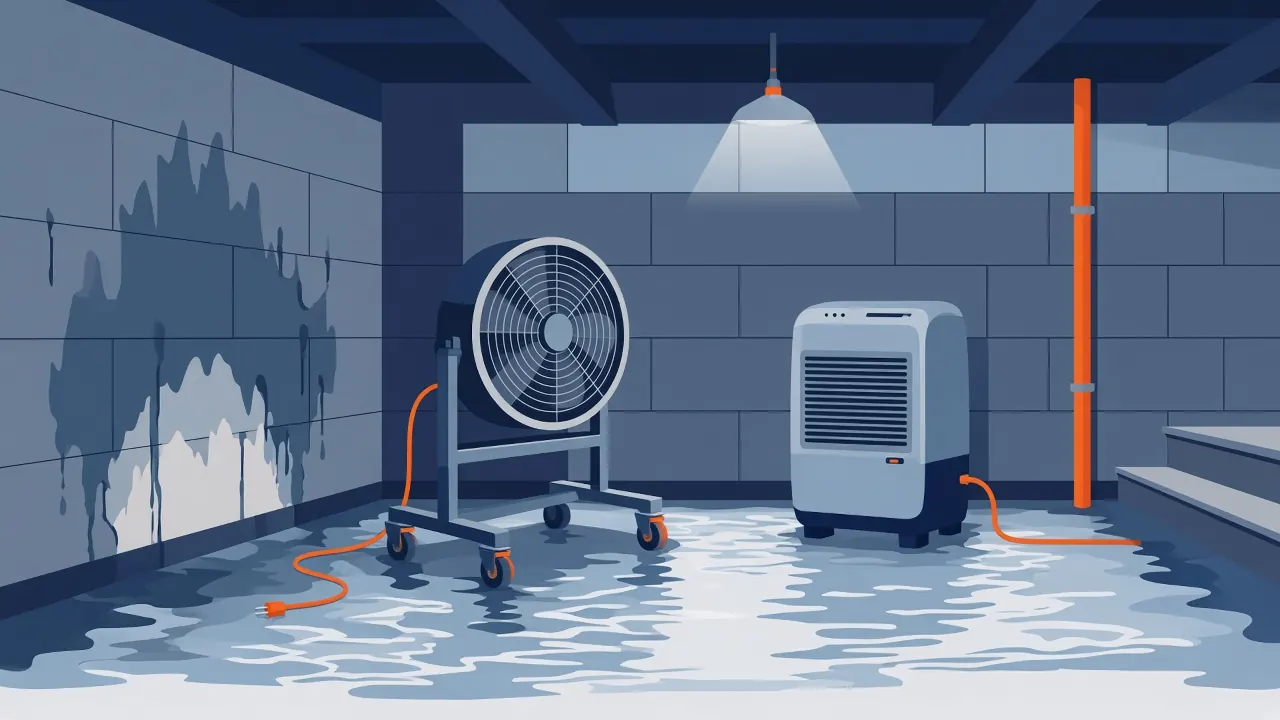
The EPA says to dry water-damaged areas and items within 24 to 48 hours to prevent mold. Pump or wet-vac standing water, pull wet carpet and pad, move belongings out, and run fans and dehumidifiers. Clean water from a sump overflow and sewage are handled differently: porous materials touched by sewage, like carpet, drywall and insulation, generally need to come out, and that cleanup is usually a job for a restoration company.
Step 6: Keep receipts for emergency work
Most policies expect you to take reasonable steps to prevent further damage. Keep receipts for pumps, fans, dehumidifier rentals, a plumber's visit and any emergency water extraction, and don't make permanent repairs until your insurer has had a chance to see the damage.
Prevent the next one
Test the sump pump before the wet season by pouring water into the pit until the float lifts and the pump runs. Consider a battery backup pump or alarm, keep downspouts discharging well away from the foundation, and ask a plumber about a backwater valve if your area has had sewer backups. Then look at your policy: Maryland requires insurers to offer water backup coverage, and in many states it is an inexpensive add-on, but limits vary, so ask what limit would actually cover a finished basement.
How we can help
ClaimToRepair makes the insurance side easier and gets the repairs done. One licensed local pro can do a free inspection, document the damage with photos and an estimate you can share with your adjuster, and quote the repairs. We don't file, negotiate or adjust claims, and only your insurer decides what is covered. If water is coming in right now, use Get immediate help: the same-day option has a $50 dispatch fee that is refunded if no one arrives the same day and isn't applied to the cost of the job, or you can schedule a visit instead.
Sources
General information only, not legal or insurance advice. Coverage depends on your policy.
Get a free inspection and written estimateDamage happening now? Get immediate help
Free inspection, no obligation. You get photos and a written estimate to share with your adjuster, so you know the real repair cost before you decide whether to file a claim. We don't file, negotiate or adjust claims.