Water Damage: What to Do in the First 48 Hours
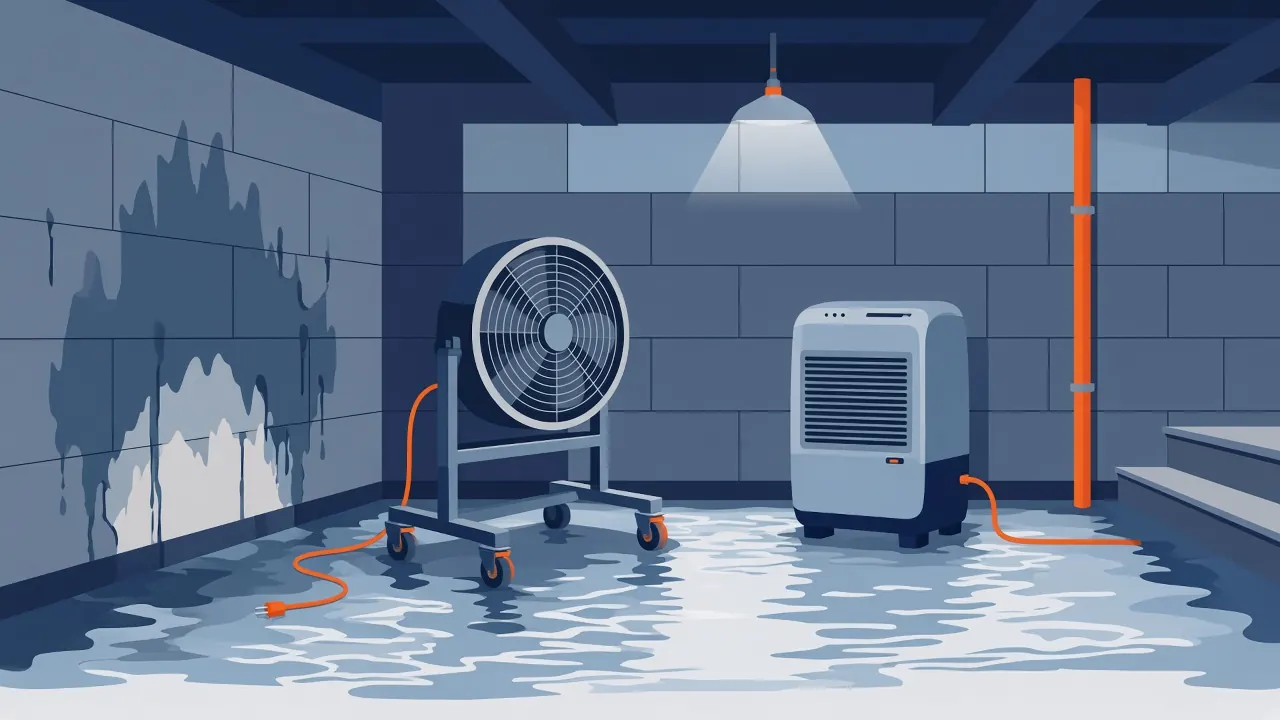
Fast steps to limit water damage and mold risk, and how homeowners vs. flood insurance typically differ.
Stop the source and stay safe
Shut off water at the main if it's a plumbing failure. Avoid standing water near electrical outlets.
Document before cleanup
Take photos and video of all affected areas and items.
Start drying immediately
Professional mitigation uses extraction, dehumidifiers and moisture meters to dry structure — not just surfaces.
Know your coverage
Standard homeowners policies generally exclude flood (rising surface water). Flood coverage typically comes from NFIP or private flood policies. Sudden pipe bursts are often treated differently.
Keep damaged items
Don't discard damaged items until your adjuster has seen them or approved disposal.
This guide is general information, not legal or insurance advice. Check your policy and consult your insurer or a licensed professional.
Related: Water & Flood Damage