Water Heater Leaking? Shut-Off, Cleanup and Insurance Steps
Published
What to do in the first minutes when a water heater leaks: shut off power or gas and the water, drain the tank safely, dry out the area within 24 to 48 hours, document the damage, and how insurance generally treats sudden vs. gradual leaks.
What should I do first if my water heater is leaking?
Short answer: Turn off the power or gas to the water heater (the breaker for an electric unit, the gas shut-off valve for a gas unit), then close the cold-water supply valve on top of the tank or, if there isn't one, the main water valve. If you smell gas, leave the house and call your gas utility. Then contain and clean up the water, photograph the damage and call a licensed plumber.
Does homeowners insurance cover a leaking water heater?
Short answer: It depends on your policy and the cause. The Washington Office of the Insurance Commissioner and the Texas Department of Insurance both explain that homeowners policies generally cover sudden and accidental water damage but usually not damage from gradual leaks. The water heater itself is often not covered if it simply wore out, according to insurer consumer guidance, though the resulting water damage to floors and walls may be. Only your insurer decides coverage.
How long do I have to dry out after a water heater leak?
Short answer: The U.S. EPA says to dry water-damaged areas and items within 24 to 48 hours to prevent mold growth, and the Texas Department of Insurance notes that mold can start growing within a day after a leak. Remove standing water, pull up wet carpet and run fans and dehumidifiers; a restoration pro can check for hidden moisture.
Is it safe to drain a water heater myself?
Short answer: It can be done safely if you cut power or gas and the water supply first, attach a hose to the drain valve that runs to a floor drain or outdoors, and wear gloves and eye protection, because the water can be scalding. Let the tank cool first if you can. If you aren't comfortable, call a licensed plumber.
First: is it a leak or condensation?
Before you panic, check whether the moisture is condensation or a drip from a fitting, which is a smaller problem than a failing tank. A. O. Smith's guidance suggests ruling out condensation before locating the source. Look at the pipe connections on top, the temperature and pressure relief valve and its discharge pipe, and the drain valve, and look under the tank. Water pooling under the tank body itself usually points to a failed tank, which a plumber will typically recommend replacing. Don't guess for long: if water is spreading, shut things off first and diagnose later.
Step 1: Shut off the power or gas
For an electric water heater, switch off its breaker in the electrical panel; if you can't tell which one it is, A. O. Smith suggests turning off the main breaker. For a gas unit, turn the gas shut-off valve on the supply pipe a quarter turn so the handle is perpendicular to the pipe. If you smell gas or are unsure, leave the house right away and call your gas utility from outside. Don't flip switches or light anything.
Step 2: Shut off the water
Close the cold-water inlet valve on the pipe entering the top of the tank by turning it clockwise until it stops. If there is no dedicated valve, shut off the main water valve where the line enters the house. Everyone in the household should know where both are before there is a problem.
Step 3: Contain and drain
Put a bucket under a small leak. To drain the tank, connect a garden hose to the drain valve at the bottom and run it to a floor drain, a sump or outdoors, away from people, pets and plants. Open a hot-water faucet somewhere in the house so air can enter, then open the drain valve. The water inside can be scalding, so wear gloves and eye protection and let the tank cool first if you can (A. O. Smith, Regional Water Providers Consortium). A typical residential tank holds roughly 40 to 50 gallons, according to A. O. Smith, so don't let the hose run across a finished floor. Don't turn the power or gas back on until the tank is refilled, or the heating elements can be damaged.
Step 4: Photograph before you clean up
Take photos and video of the heater (including its label with the model, age and serial number), where the water came from, how far it spread and every damaged item. The Texas Department of Insurance says to take pictures and video before making repairs if you can and not to throw away damaged items until the adjuster has seen them. If a plumber replaces a part or the tank, photograph the failure or ask them to note the cause in writing; your insurer may ask what happened.
Step 5: Remove the water and start drying
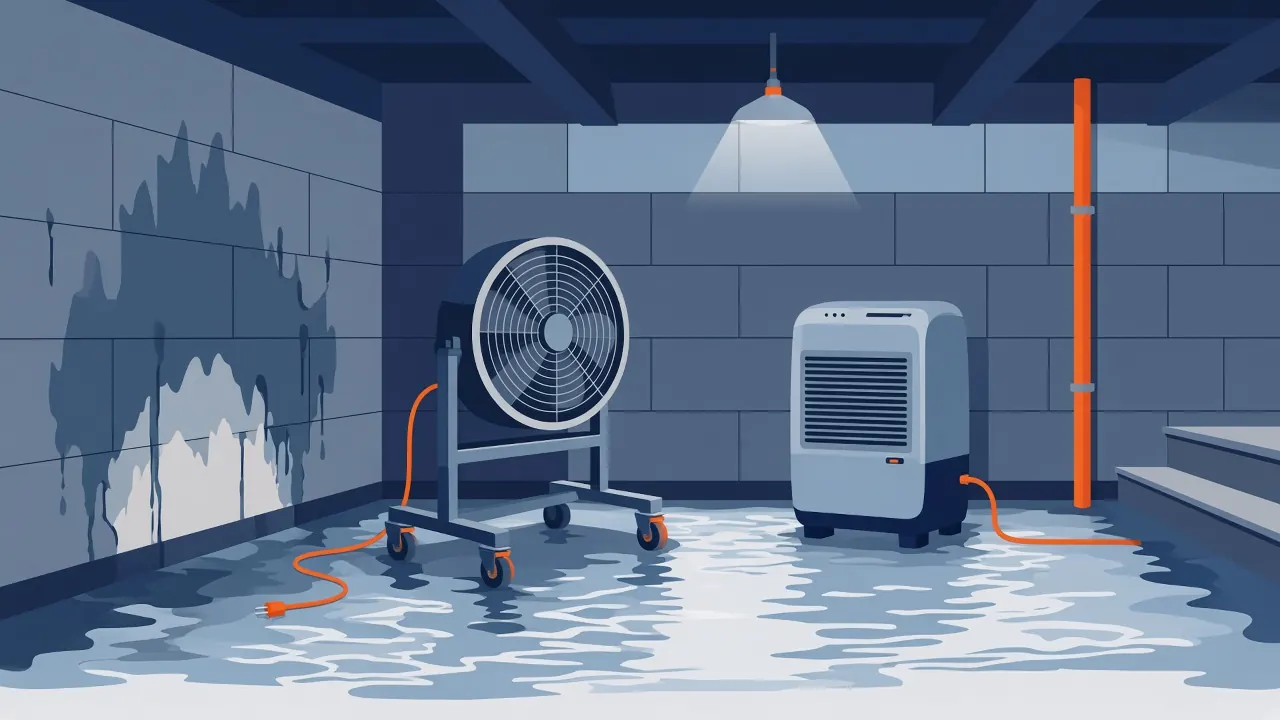
Mop or wet-vacuum standing water, lift rugs and wet carpet, and move furniture and belongings to a dry spot. The Texas Department of Insurance says to remove pools of water and start drying right away because mold can start growing within a day after a leak, and the EPA says to dry water-damaged areas and items within 24 to 48 hours. Run fans and a dehumidifier and open doors and windows if the weather allows. Water often wicks into baseboards, drywall, insulation and the subfloor, where a pro with moisture meters can find it. Wet drywall, insulation or carpet padding that can't be dried may need to be removed.
Step 6: Call a plumber and your insurer
A licensed plumber can confirm the cause, repair or replace the unit and tell you whether anything else around the heater needs attention. Call your insurance company or agent promptly. Write down what happened, when you found it and what you did to stop it.
How insurance usually treats a water heater leak
The Washington Office of the Insurance Commissioner says homeowners insurance often covers sudden, accidental water damage, such as a supply line bursting under a sink, but that most policies don't cover gradual leaks that continue over time, which insurers consider a maintenance problem. The Texas Department of Insurance says the same: sudden and accidental damage is generally covered, gradual leaks usually are not. Progressive's consumer guidance says a leaking appliance typically won't be covered if the leak came from normal wear and tear or lack of maintenance, but that the water damage to surrounding floors and cabinets may be covered if the appliance suddenly malfunctions, subject to your limit and deductible. Policies differ, and only your insurer decides.
Prevent the next one
The Washington Office of the Insurance Commissioner suggests checking your water heater for rust, corrosion or moisture, adding a drain pan with a leak detector underneath, and watching your water bill for unexplained spikes. Know where your shut-off valves are, and consider having a plumber inspect a heater that is getting old.
How we can help
ClaimToRepair makes the insurance side easier and gets the repairs done. One licensed local pro can do a free inspection, document the damage with photos and an estimate you can share with your adjuster, and quote the repairs. We don't file, negotiate or adjust claims, and only your insurer decides what is covered. If water is coming in right now, use Get immediate help: the same-day option has a $50 dispatch fee that is refunded if no one arrives the same day and isn't applied to the cost of the job, or you can schedule a visit instead.
Sources
- A. O. Smith: What to Do When Your Hot Water Heater Is Leaking
- Regional Water Providers Consortium: How to access water from your water heater
- Washington Office of the Insurance Commissioner: Leaks, water damage, and mold
- Texas Department of Insurance: When are water damage and mold covered by insurance?
- U.S. EPA: A Brief Guide to Mold, Moisture and Your Home
- Progressive: Does homeowners insurance cover plumbing?
General information only, not legal or insurance advice. Coverage depends on your policy.