Emergency Roof Tarping After a Storm: What Homeowners Should Know
Published
Why fast temporary protection matters, how to stay safe, what a proper tarp job looks like, and which records to keep for your claim.
Should I tarp my roof after storm damage?
Short answer: If rain can get in through damaged shingles, flashing or a hole, temporary protection such as a properly secured tarp can help limit further interior damage. Many homeowners policies list protecting the property from further damage as one of your duties after a loss, and reasonable temporary repair costs may be reimbursable depending on your policy. Do not climb onto a damaged or wet roof yourself; a roofer or restoration company can install a tarp safely.
Does insurance pay for an emergency roof tarp?
Short answer: It depends on your policy and on whether the underlying damage is covered. Many policies treat reasonable, necessary temporary repairs as part of a covered claim, subject to your deductible. Keep the invoice and photos, and ask your insurer or agent before authorizing anything beyond temporary protection.
Safety comes first
Stay off the roof during a storm and while it is wet, damaged or covered in debris. Watch for downed power lines and report them to your utility. If a tree or large limb is on the house, keep everyone out of the rooms beneath it. If anyone is in immediate danger, call 911.
Why temporary protection matters
Water that gets past the roof can soak insulation, drywall, ceilings and flooring, and the damage can spread with every rain. The U.S. EPA advises drying wet building materials within 24 to 48 hours to help prevent mold growth, so stopping new water from coming in is usually the first priority.
What a proper tarp job looks like
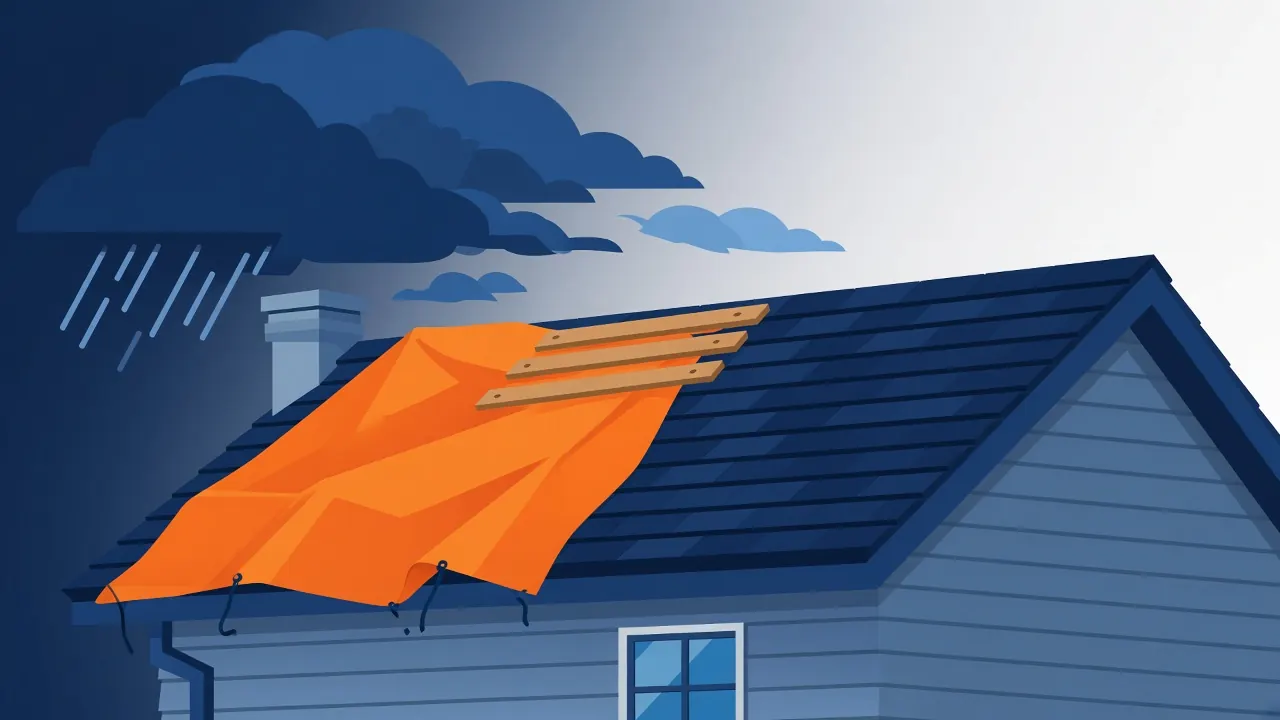
A good temporary cover extends well past the damaged area, is secured so wind cannot get underneath it, and directs water off the roof rather than into it. Ask the company to photograph the damage before the tarp goes on and the finished installation afterward.
Document everything
Take date-stamped photos and video of the roof, attic and any interior water stains before and after the tarp is installed. Keep invoices and receipts for the tarp, any water extraction and any supplies you buy. Write down the storm date and when you first noticed the damage.
Temporary vs. permanent repairs
A tarp is a short-term fix. Many insurers want to inspect the damage before permanent repairs begin, so check with your insurer or agent before replacing shingles or decking. Policies vary, and some losses may not be covered at all, so review your own policy and deductible.
Help after major disasters
After some federally declared disasters, the U.S. Army Corps of Engineers runs Operation Blue Roof, which installs temporary roof coverings at no cost for eligible homeowners in designated areas. Check local emergency management announcements to see if it is active where you live.
Next step: a free inspection
Request a free inspection and one local company will contact you to look at the damage and give you a free quote, at no cost to you to get started.
General information only, not legal or insurance advice. Coverage depends on your policy.